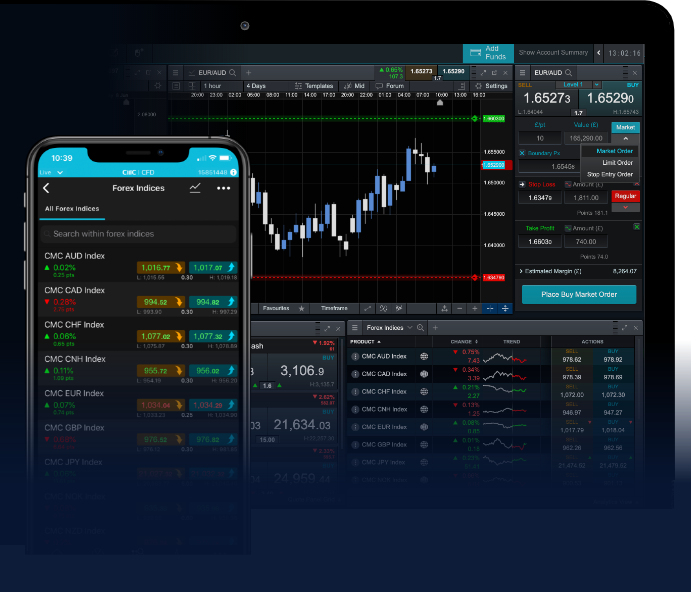
Forex trading is more than just buying and selling currency pairs; it requires a depth of knowledge, skill, and a comprehensive understanding of market dynamics. As traders advance in their journey, they begin to explore more complex strategies and methodologies to maximize their potential profits. This article delves into advanced forex trading concepts that can help traders refine their techniques and enhance their overall performance. For those looking to broaden their understanding, advanced forex trading Trading FX Broker offers invaluable resources and insights.
Understanding Market Structure
One of the foundational elements of advanced forex trading is understanding market structure. Market structure refers to the arrangement of price movements that form the basis for analyzing trends, reversals, and continuations. Traders must learn to identify the different phases of market cycles, including accumulation, markup, distribution, and markdown. Recognizing these phases allows traders to make informed decisions about entering and exiting trades based on prevailing market conditions.
Identifying Trends
Effective trend analysis is central to successful trading. Advanced traders employ a variety of techniques to identify trends, including the use of moving averages, trend lines, and price action analysis. Moving averages, particularly the Exponential Moving Average (EMA), can help traders spot trends more effectively by smoothing out price data. Trend lines, drawn by connecting significant highs and lows in price movement, serve as visual tools to identify potential support and resistance levels. Combining these methods provides traders with greater confidence in their analysis.
Advanced Technical Analysis Tools
Technical analysis is a cornerstone of forex trading, and as traders become more sophisticated, they often turn to advanced tools and indicators to enhance their analysis. Some popular advanced tools include:

- Fibonacci Retracement Levels: This tool helps traders identify potential reversal levels based on the Fibonacci sequence, providing key levels to consider for entry and exit points.
- Relative Strength Index (RSI): This momentum oscillator measures the speed and change of price movements, helping traders identify overbought or oversold conditions.
- MACD (Moving Average Convergence Divergence): This indicator combines moving averages to identify trend direction and momentum, enabling traders to more accurately gauge potential price movements.
Risk Management Techniques
No matter how advanced a trader becomes, sound risk management practices remain essential. Effective risk management enables traders to protect their capital and minimize losses. Advanced traders often employ techniques such as position sizing, the Kelly Criterion, and the use of stop-loss orders to manage risk effectively.
Position sizing involves determining the appropriate amount of capital to risk on each trade based on the trader’s total account size and risk tolerance. The Kelly Criterion further refines this by providing a formula to calculate the optimal bet size based on historical data. Lastly, setting stop-loss orders is crucial for limiting potential losses and protecting profits. Advanced traders often use trailing stops to lock in profits as trades become favorable.
Algorithmic and Automated Trading
With advancements in technology, many experienced traders are leveraging algorithmic and automated trading systems. These systems use algorithms to execute trades based on predefined criteria, freeing traders from the emotional aspects of trading. Some common types of algorithmic trading strategies include:
- Mean Reversion: This strategy bets that the price of a currency pair will revert to its historical average over time.
- Trend Following: Algorithms are designed to identify and capitalize on existing market trends by entering trades in the direction of the trend.
- Arbitrage: This involves simultaneously buying and selling in different markets to profit from price discrepancies.
While algorithmic trading can be highly effective, it is essential for traders to thoroughly backtest their strategies and remain involved in monitoring their performance to ensure profitability.
Understanding Economic Indicators
Advanced traders must also stay informed about economic indicators that affect currency prices. Key indicators include Gross Domestic Product (GDP), employment data, inflation rates, and interest rates. By understanding the implications of these indicators, traders can make better predictions about currency movements and adjust their strategies accordingly.
For instance, a rising GDP and low unemployment rates typically indicate a strengthening economy, which may lead to appreciation of the currency. Conversely, high inflation rates may prompt central banks to raise interest rates, potentially strengthening the currency but also leading to market volatility.
Psychological Aspects of Trading
Finally, the psychological aspect of trading should not be underestimated. Advanced traders often confront challenges such as fear, greed, and overtrading. Establishing a disciplined trading routine, utilizing journaling to reflect on past trades, and participating in trading communities can significantly enhance a trader’s psychological resilience.
Your emotional state can profoundly influence your trading decisions. Techniques such as meditation or mindfulness can assist in maintaining mental clarity and focus during trading sessions. Additionally, setting realistic goals and expectations while continually refining your strategies can help in managing emotional reactions to market fluctuations.
Conclusion
Advanced forex trading requires a comprehensive understanding of market structure, technical analysis, risk management, algorithmic trading, economic indicators, and the psychological elements that affect decisions. By mastering these facets, traders can significantly improve their performance and profitability in the forex market. Continuous education, practical experience, and adaptive strategies are essential for those looking to elevate their trading to an advanced level. As the forex market evolves, traders must remain proactive in their learning to harness new tools and techniques effectively.